
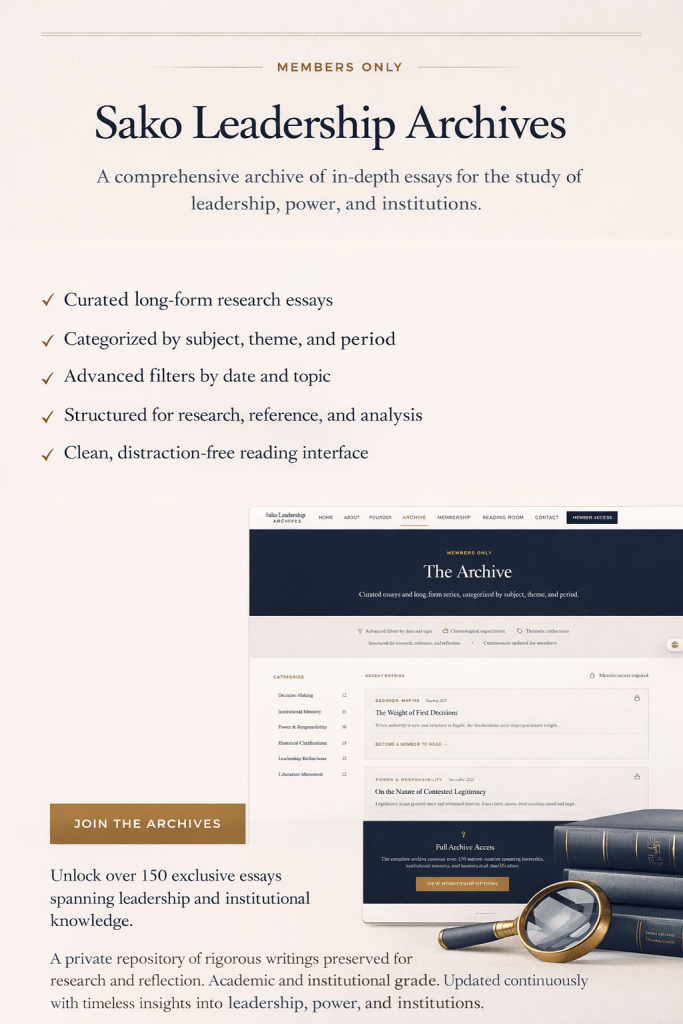
Historical & Educational

chatgpt image jan 23, 2026, 10 5

New Archive Test

Archiving refers to the process of preserving records that are no longer in active use but remain valuable for legal, historical, or administrative purposes. Below are samples of common archival periods and thematic structures. Archive Periods Archival periods are often defined by Data Retention Policies or chronological milestones: Yearly/Annual Archives: Creating a distinct archive for every calendar year (e.g., 2023, 2024) to manage high volumes of news, events, or fiscal records. Decadal/Milestone Archives: Grouping records by significant eras or project lifecycles (e.g., “1995–2011 Development Phase”). Retention-Based Periods: Storing data for specific durations—such as 7 years for tax records or 90 days for unused digital templates—before permanent storage or deletion. Archive Theme Samples Themes organize archives by subject matter or functional category to ensure accessibility: Sector-Based: Categorizing by industry or department, such as Energy (E-1-dat), Waste (W-1-dat), or Finance. Historical & Educational: Using visual themes like “Vintage,” “Antique Papyrus,” or “Decolonization” for academic presentations and museum heritage projects. Functional/Administrative: Organized by document type, such as “Contracts and Proposals,” “Legal and Compliance,” or “HR eProfile”. Personal Archives: Collection-based themes ranging from a person’s record collection to life-event documentation like receipts or letters. For digital platforms, Archive Templates are used to standardize how these groups of posts or data are displayed to users.
New Archive Test Read More »

featured best selling book

Test Archive

What does Lorem Ipsum text say? Printers in the 1500s scrambled the words from Cicero’s “De Finibus Bonorum et Malorum” after mixing the words in each sentence. The familiar “lorem ipsum dolor sit amet” text emerged when 16th-century printers adapted Cicero’s original work, beginning with the phrase “dolor sit amet consectetur.” They abbreviated “dolorem” (meaning “pain”) to “lorem,” which carries no meaning in Latin. “Ipsum” translates to “itself,” and the text frequently includes phrases such as “consectetur adipiscing elit” and “ut labore et dolore.” These Latin fragments, derived from Cicero’s philosophical treatise, were rearranged to create the standard dummy text that has become a fundamental tool in design and typography across generations. The short answer is that lorem ipsum text doesn’t actually “say” anything meaningful. It’s deliberately scrambled Latin that doesn’t form coherent sentences. While it comes from Cicero’s “De Finibus Bonorum et Malorum,” the text has been modified so extensively that it’s nonsensical. Why scrambled text? That’s exactly the point. By using text that’s unreadable but maintains the general pattern of regular writing — including normal word length, spacing, and punctuation — designers can focus on the visual elements of a layout without the actual content getting in the way. The pseudo-Latin appearance gives it a natural feel while ensuring it won’t distract from the design itself.

Test Archive Read More »