
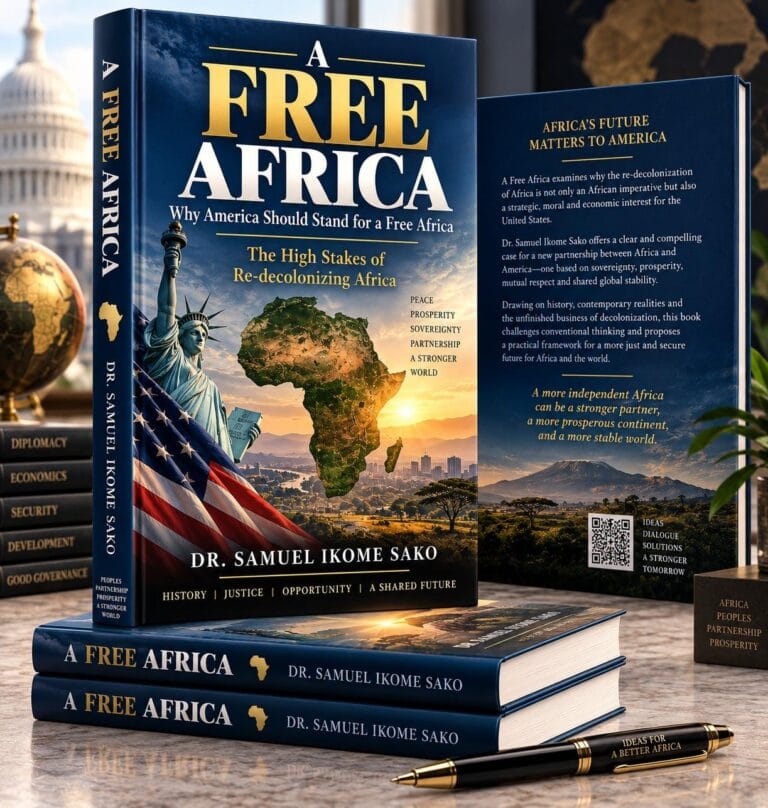
The great decolonization movement of the twentieth century changed the political map of Africa. Flags were raised. National governments replaced colonial administrations. African states took their seats in international institutions.
Yet political independence did not settle every question of African freedom.
A Free Africa turns from the particular history of Southern Cameroons to the larger African and international system.
It asks what meaningful African sovereignty requires in the twenty-first century and why the answer should matter not only to Africans, but also to the United States and the democratic world.
The book approaches re-decolonization as a contemporary challenge rather than an attempt to replay the independence struggles of the twentieth century. Its concern is with the political, institutional, economic and strategic capacity of African peoples to shape their own future while accepting responsibility for the quality of the institutions they build.
External dependency is part of that discussion. So is African agency.
The failure of African governments, elites and institutions cannot simply be assigned to colonial history or foreign powers. Genuine freedom carries responsibility.
Why America?
The subtitle deliberately addresses the United States.
Why America Should Stand for a Free Africa asks American policymakers, citizens, investors, scholars, members of Congress, diplomats, African Americans and the African diaspora to reconsider the strategic importance of African freedom.
The premise is that the relationship between America and Africa should mature beyond the old categories of aid, crisis management, extraction and geopolitical competition.
Africa should be approached as a continent of peoples, markets, institutions, strategic geography, natural resources, human talent and emerging political choices.
The question for America is therefore larger than which global power gains influence in Africa.
The deeper question is what kind of Africa will emerge—and what kind of relationship the United States wants to build with it.
Re-decolonizing Africa
In this book, freedom cannot be reduced to changing foreign relationships.
African agency remains central.
Re-decolonization therefore raises questions about governance, constitutionalism, leadership, economic capacity, institutions, human development, dependency, justice and the ability of African societies to convert sovereignty into opportunity for their people.
The objective is neither hostility toward the West nor the romanticization of Africa.
It is a search for a more mature relationship between free peoples.
Why This Book Belongs in the Archives
If Unfinished Business in Africa examines one unresolved African political question through forty years of history and personal experience, A Free Africa widens the lens.
It asks what lessons can be carried from particular African struggles into a larger conversation about the continent.
Together, the books reflect an important purpose of the Sako Leadership Archives: to connect historical memory with future leadership.
History tells us how institutions and political arrangements came to exist. Leadership asks what we should do with that knowledge. The archive exists at the meeting point between the two.
Who Should Read It?
A Free Africa is written for Africans at home and throughout the diaspora, but its argument deliberately reaches beyond an African audience.
It speaks to American policymakers and legislators; diplomats and foreign-policy professionals; African and African-American leaders; students and scholars of Africa; investors and business leaders; development professionals; journalists; civil-society organizations; churches and faith communities; emerging African leaders; and younger people asking what genuine African sovereignty should mean in their generation.
Above all, it appeals to people willing to move beyond the old choice between African victimhood and denial of historical injustice.
Africa has experienced domination.
Africa also possesses agency.
The future requires us to take both seriously.